
Door built into the gate or a separate wicket – which to choose?
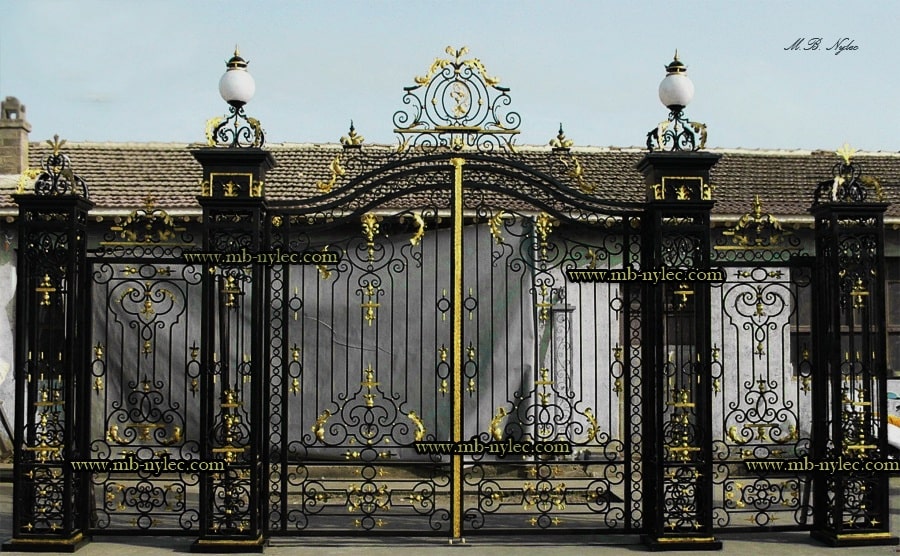
Sooner or later, anyone planning a driveway entrance has to decide how people on foot will get in. One option is a small door built into a gate leaf; the other is a separate wicket, set beside the driveway or somewhere else along the fence line. Both have their strengths, and the choice affects how the whole front of the property looks as well as how convenient it is from day to day.
A door built into the gate leaf
A built-in door is cut into the gate itself. Its main advantage is saving space: no extra posts or additional length of fence are needed, which matters on narrow lots with a short frontage. The result looks compact and the pattern of the gate stays uninterrupted.
This solution has its limits, though. A door in the leaf usually keeps a frame rail at the bottom that you have to step over, which is awkward with a stroller or a bicycle. A leaf with a door in it is heavier and more complex, so it needs strong hinges and solid posts. If the gate has an automatic opener, the door must have a safety switch that stops the motor from running while it is open. On sliding gates, a built-in door is rare and less practical.
A separate wicket
A separate wicket has its own posts and can go wherever it is most convenient: next to the driveway gate or closer to the path that leads to the front door. You walk through it without a threshold, it is easy to fit an intercom, a mailbox and a light beside it, and the main gate does not have to open every time someone arrives on foot. Formal layouts sometimes use two wickets, one on each side of the driveway gate, for a symmetrical, palace-like composition like the one in the photo at the top of this article.
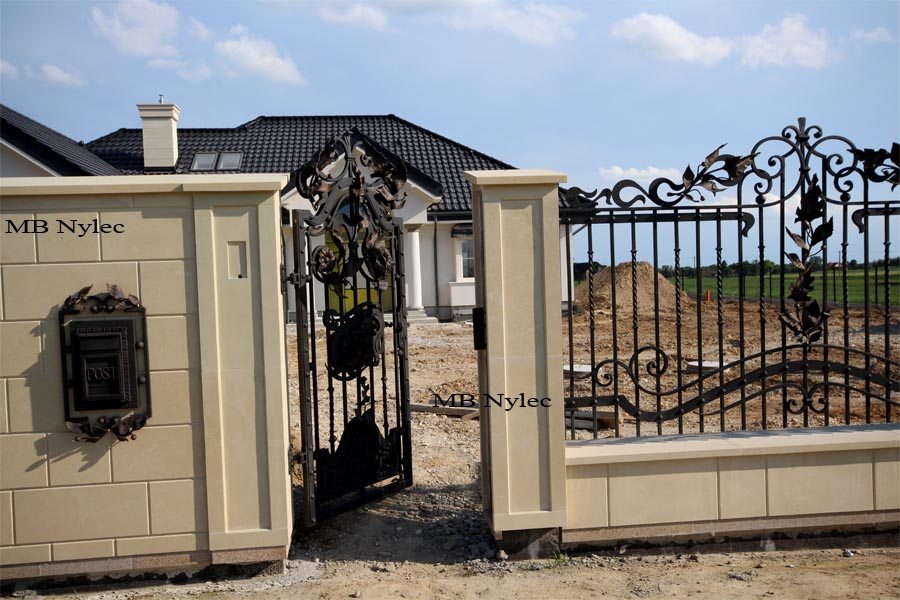
A separate wicket also makes everyday convenience easier to arrange. It can have an electric strike released from inside the house, a closer that pulls the leaf shut behind you and a lever handle on the inside. Like the driveway gate, it should swing inward, away from the sidewalk, so the leaf is planned with room to open freely.
On the other hand, a separate wicket takes up more room along the fence line and needs extra footings for its posts. It is also a good place to show off detail: seen up close, a wicket can carry richer ornament than the gate. Designs like these are gathered among our wrought iron wickets and pedestrian gates, and complete layouts with a driveway gate and matching wickets are shown in our exclusive gate sets.
How to decide
A built-in door suits a narrow frontage, a manually operated swing gate and places where people on foot are rare. A separate wicket is the better choice when family members, guests and couriers come through every day, when the gate is automated and when a step-free entrance matters. On properties with a long frontage, a separate wicket also gives more freedom in designing the whole fence.
The look of the whole frontage counts as well. A gate with a built-in door reads as one calm surface, which fits simple, modern fences. A gate with a separate wicket forms a richer composition with a clear rhythm of posts, better suited to classic houses, manors and country estates. On arched gates a built-in door breaks the line of the top, so for designs like these we almost always suggest a separate wicket.
Whichever you choose, the gate and the wicket should come from one design. Then motif, finish and height work together, and the wicket does not look like an afterthought. If your house is built of logs, our article on matching a fence and gates to a log home shows how the same idea works with nature motifs.