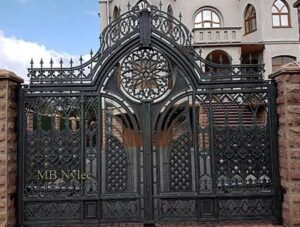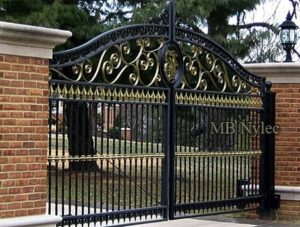
Forged Baroque Palace Gate (BP158)
BP158 is a smaller version of one of the most famous gates in the world, the entrance gate of the Petit Palais in Paris, built for the 1900 World’s Fair and today home to the city’s museum of fine arts.

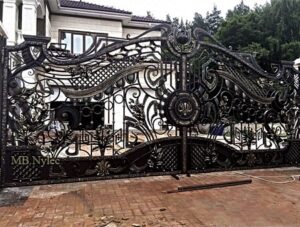
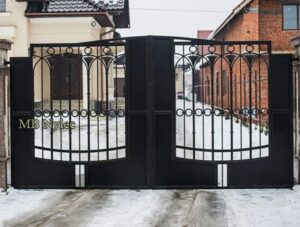
Recreating that density of scrolls, leaves and crests in a smaller size takes enormous skill, so we assign this gate only to our best blacksmiths and metalworkers. The matching wicket, shown in the second photo, is just as intricate.
Any size, identical detail
We can make an identical gate in any size for your entrance. It is the kind of piece that defines our palace-style wrought iron gates.

Baroque splendour, carefully protected
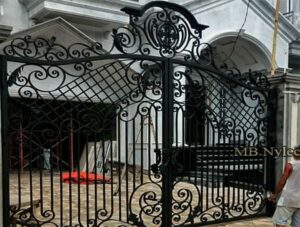
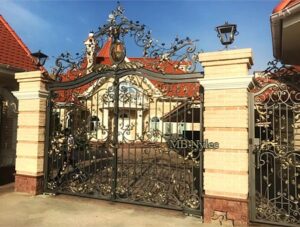
BP158 follows the key principles of the Baroque: splendour, abundant ornament, plant motifs and an arched crest full of delicate scrolls. It is a natural fit for residences, villas, palaces, castles and exclusive restaurants, and it also works in front of modern architecture.
Professional forging and hot-dip galvanizing give every element a fine finish and a long life. The gate resists mechanical damage and the weather, and its metal parts do not deteriorate over time.
Pillars and a six-metre original
The leaves can be hung on masonry posts, but poured concrete columns or forged steel pillars are a better match for a gate of this weight and character. It pairs well with classic metal fences, and a matching wicket, BP158F, continues the pattern for pedestrians. Standing in front of the real thing is the best way to appreciate the depth of the relief: a gate of this design, six metres (about 20 ft) tall, can be seen in person in our company gallery.
For residences and family homes alike
Every element of BP158 is hot-dip galvanized, the best corrosion protection available, so the metal parts do not rust over time. Despite their size, the leaves move very smoothly and lightly, which best shows the quality of the work. A forged gate like this suits luxurious palaces and residences, but it can also crown the entrance of a family house or a commercial building.