Forged Fence Span with a Pheasant (BM17)
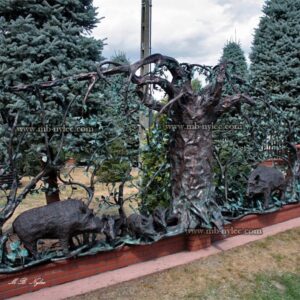
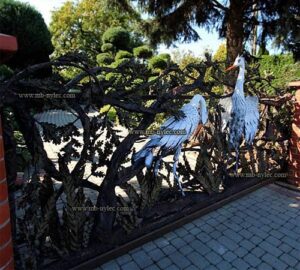
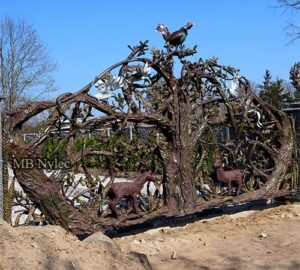
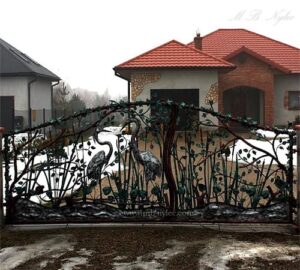
BM17 places a life-size pheasant, its plumage picked out in copper tones, at the centre of a span of forged trees and plants.
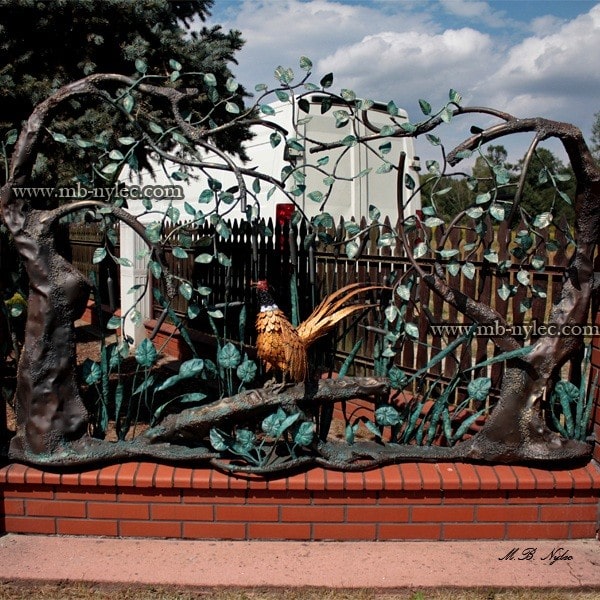

Every element is three-dimensional and hot-dip galvanized, and we can change the trees, the layout or the animals.
The pheasant as the main figure
In BM17 the pheasant is not a small detail but the clear focal point of the scene. It stands at 1:1 scale in the middle of the span, its plumage picked out in copper tones, while forged trees and plants frame it on both sides. The background leads the eye calmly along the panel, so the bird stays in front and the scene looks natural rather than crowded.
A show design you can change
The span in the photo is one of our showcase designs, but its form is open. We can change the shape of the span, make the vegetation denser or simpler, move the main motif, or redesign the whole layout while keeping the style. Every part is steel, so the span remains fully metal and ready for outdoor use, and it is hot-dip galvanized before colouring.
Depth that catches the light
The elements run at several depths rather than in one plane, which gives a subtle three-dimensional effect and shows off the sculptural work. Up close you see the transitions between leaves and branches; from further away the span reads as a clear scene without visual chaos. Pheasants, partridges and other game birds also work well on gates and wickets in the same set.
Pheasant scenes suit country houses, hunting lodges and estates with game in their history. The plumage can follow nature, in copper, green and red tones, or be kept in one dark patina for a more restrained look; both are applied by hand over the galvanized steel. A partridge or a hare can join the pheasant if the span is long enough.
Subtle or striking
The span can be made more subtly or more boldly, depending on the role it should play on the property, so the design keeps its unique character without forcing one rigid solution. It is meant for people who want an artistic motif of nature in the fence but care about a solid structure and the freedom to adapt every part of the pattern, from the shape of the trees to the kind of animal at the centre.