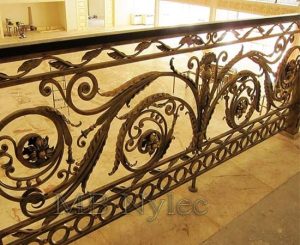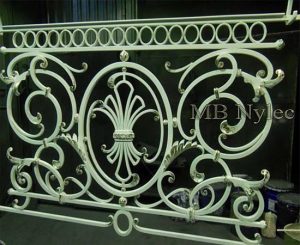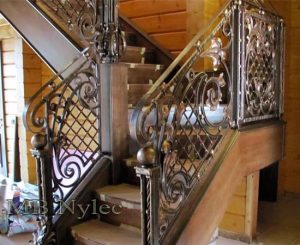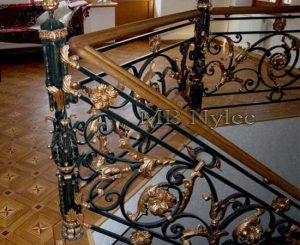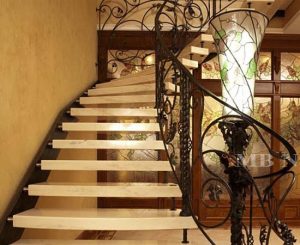
Forged Stair Railing with Wooden Handrail (BA62)
BA62 follows a design of the old masters found mainly in French palaces.

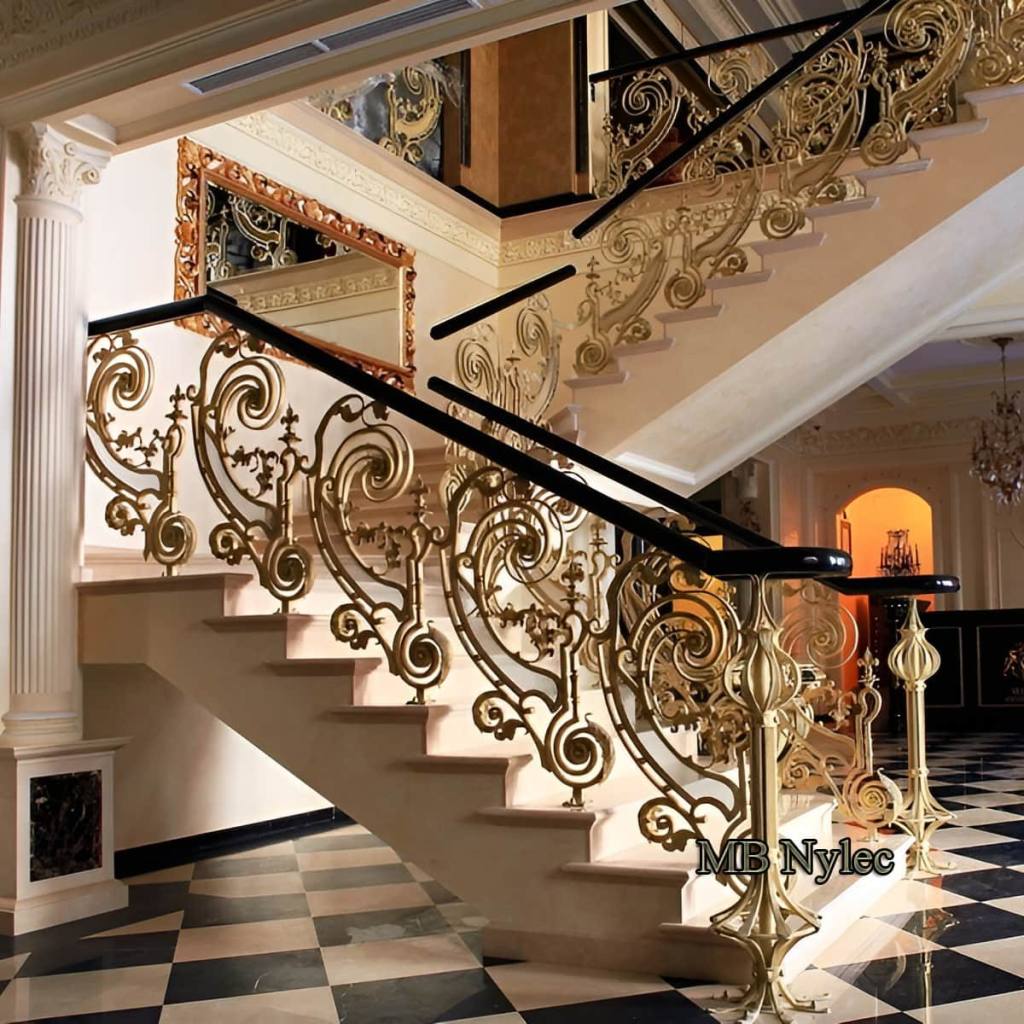
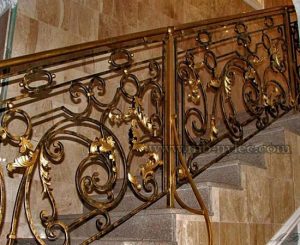
Each baluster spans about two steps and is identical to the one before, so the railing is a repeating rhythm rather than a continuous pattern.
Set on marble steps with a dark wooden handrail, that rarity gives it real originality.
One baluster per two steps
BA62 follows a scheme of the old masters known mainly from French palaces. Each large ornamental baluster spans about two steps and repeats the one before it, so the railing reads as a stately rhythm rather than a continuous ribbon of ornament. In the photo the gilded balusters stand on marble steps of a double staircase, under a black wooden handrail that draws a crisp line above the gold.
Why the handrail is black
A dark handrail sets off gilded ironwork better than a light one: it frames the ornament from above and makes the gold look richer. It also hides the wear of daily use. The rail is profiled to fit the hand and to follow the curve of the stair, and it is fixed so that it can be refinished without taking the railing apart.
- gilded, bronze or black-and-gold balusters,
- handrails in ebonised oak, walnut or mahogany,
- the same baluster on gallery and landing railings,
- marble, stone or timber steps.
The repeating-baluster idea belongs to a family of palace designs shown with our wrought iron railings for stairs and galleries. The wooden handrail softens the steel, a combination we use on many indoor stair railings.